
Table Of Contents
- 1 Introduction
- 2 What are “Assembly Halls”?
- 3 General Introduction to Assembly Halls in Hoi An
- 4 Top 5 Assembly Halls in Hoi An
- 4.1 Phuc Kien Assembly Hall – The Most Famous Assembly Hall in Hoi An
- 4.2 Cantonese (Quang Dong) Assembly Hall—The spiritual home of the Chinese in Hoi An
- 4.3 Chaozhou (Trieu Chau) Assembly Hall – History, Architecture & Visitor’s Guide
- 4.4 Assembly Hall of Five States – Assembly Hall of Five Different States from China
- 4.5 Hai Nam Assembly Hall – A Complete Visitor’s Guide
- 5 What to Eat in Hoi An?
- 6 Entrance Fee in the Assembly Halls in Hoi An
- 7 Tourist Tips for Visiting Assembly Halls in Hoi An
- 8 Itinerary to Visit Assembly Halls in Hoi An for First-Timers
- 9 Conclusion
Introduction
What are the assembly halls to see in Hoi An, Viet Nam? What is the difference between them? The five assembly halls can be confusing for first-time visitors in Hoi An. In this travel guide, Hoi An Locals share some useful information about 5 assembly halls in Hoi An to help you plan your trip more easily.
What are “Assembly Halls”?
An assembly hall is a shared building for people from the same hometown, profession, or religion. In Hoi An, these halls were built by the Chinese community and serve as both community centers and distinctive examples of Chinese-influenced architecture. They were made to:
- Worship: Dedicated to the worship of guardian gods and ancestors.
- Exchange: A place for members of the club to meet, exchange, and share experiences.
- Support: Support each other in life and business.
Today, the guildhalls turn into popular tourist spots. Besides traveling to ancient towns and enjoying culinary specialties, visitors should not miss the opportunity to visit the TOP 5 famous assembly halls in Hoi An.
General Introduction to Assembly Halls in Hoi An
Hoi An’s Assembly Halls, built by the Chinese community between the 17th and 19th centuries, are important cultural and historical landmarks. They combine traditional Chinese architecture with local Vietnamese influences. Notable assembly halls include the following:
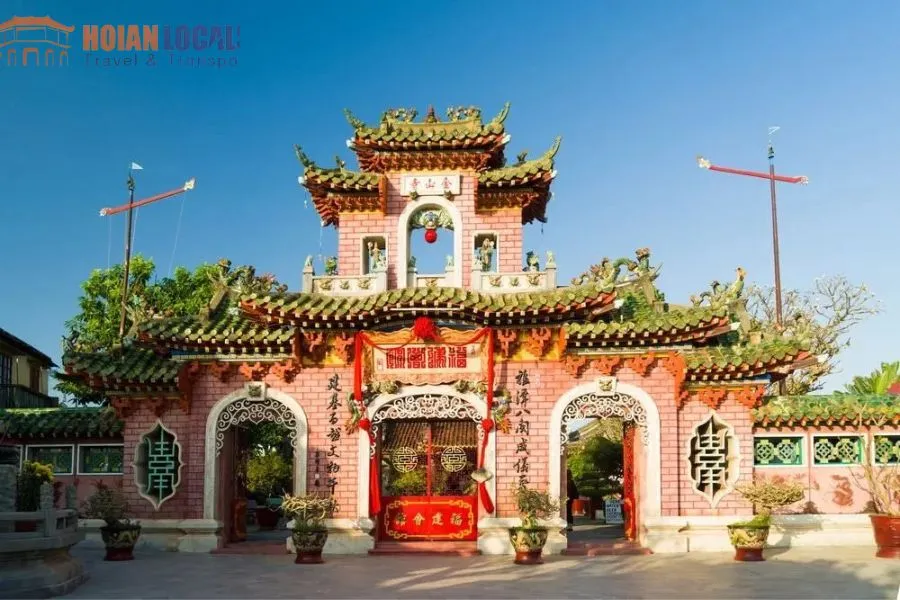
Entrance gate: The entrance gate of the assembly hall, often elaborately decorated with reliefs and parallel sentences carrying feng shui meaning.
- Front yard: Open space where community activities are held.
- Main hall: The main place of activities of the guild hall, where meetings and festivals are held.
- Ancestral Temple: Dedicated to worshiping ancestors and guardian gods.
- Auxiliary areas: Including a living room, bedroom, kitchen… serving the living needs of members in the club.
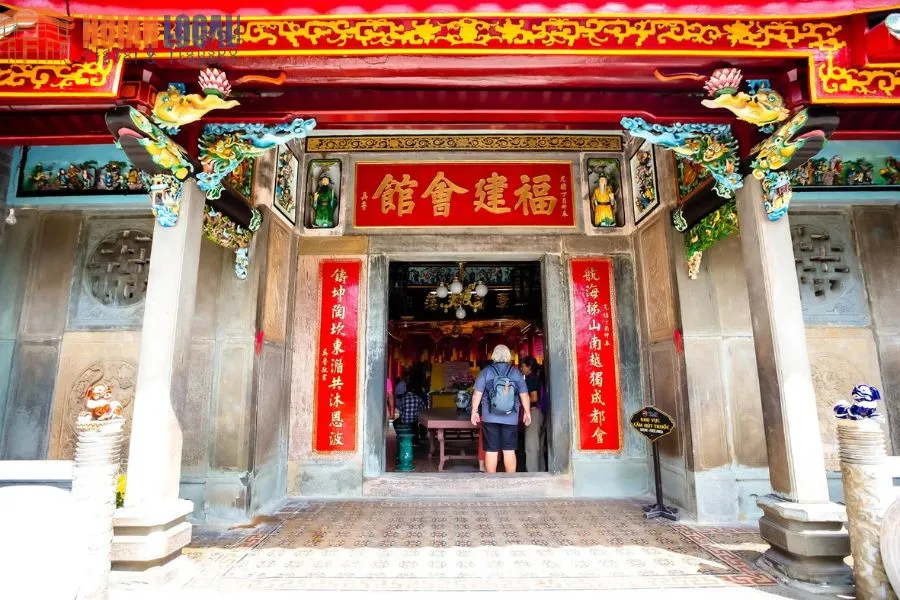
The assembly halls feature intricate wooden carvings, dragon and phoenix motifs, murals, and ceramics, with red and yellow symbolizing luck and prosperity. Today, they are important cultural landmarks and popular tourist attractions in Hoi An Ancient Town. Hoi An’s assembly halls offer visitors a chance to explore the history and culture of the Chinese community while admiring their unique architecture. As valuable cultural heritage sites, they reflect the blend of Eastern and Western cultures and play an important role in preserving Hoi An’s identity and attracting tourists.
Top 5 Assembly Halls in Hoi An
Phuc Kien Assembly Hall – The Most Famous Assembly Hall in Hoi An
- Address: 46 Tran Phu Street, Hoi An Ward, Da Nang City
- Opening hours: 7:00 – 18:00 daily
Phuc Kien Assembly Hall is a historic landmark in Hoi An, serving as both a place of worship and a community center for the Chinese community. Built in the 17th century by Chinese immigrants from Fujian Province, China.
Unique Architecture
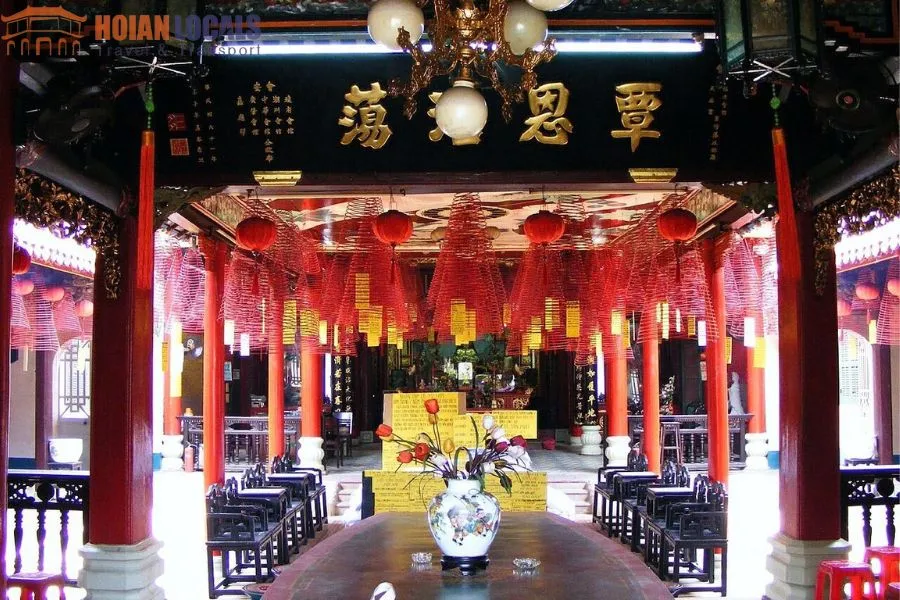
- Typical Chinese style: The Assembly Hall possesses sophisticated architectural features, bearing the mark of ancient China. From the red brick walls to the curved tiled roofs to the delicate carvings, all create a solemn and ancient space.
- Solid pillar system: The meticulously carved wooden pillar system bears the main load for the entire structure. This shows the ingenuity and high technique of the ancient craftsmen.
- Tranquil garden: The garden of the guildhall is designed in harmony with the main architecture, creating a cool and quiet green space. Bonsai trees, small fish ponds… bring a sense of relaxation to visitors.
Cultural Values
- Community center: The Assembly Hall is where Chinese people living in Hoi An gather and organize cultural activities and traditional festivals. This place preserves the precious cultural and spiritual values of the Chinese community.
- Heritage preservation: The Fujian Assembly Hall has been recognized as a national historical and cultural relic. The preservation and promotion of the Assembly Hall’s value contribute to enriching Vietnam’s cultural heritage.
- Visiting the Fujian Assembly Hall: When visiting the assembly hall, you will have the opportunity to see a prominent historical site in Hoi An, Vietnam
- Explore unique architecture: Admire the sophisticated architectural lines and explore the hidden corners of the ancient house.
- Learn about Chinese culture: Learn about the history and customs of the Chinese in Hoi An.
- Pray for peace: Light incense and pray for peace at the main altar, sending good wishes.
The Fujian Assembly Hall is a one-of-a-kind piece of architecture and a living museum of culture. If you have a chance to visit Hoi An, don’t miss the opportunity to explore this shared home of the Chinese people.
Cantonese (Quang Dong) Assembly Hall—The spiritual home of the Chinese in Hoi An
- Address: 176 Tran Phu Street, Hoi An Ward, Da Nang City
- Opening hours: 7:00 – 18:00 daily.
The Cantonese Assembly Hall, built in the late 19th century, is a historic landmark in Hoi An. It preserves the heritage of the Chinese community and attracts many visitors.
Originally dedicated to Thien Hau and Confucius, the assembly hall was converted in 1911 to worship Quan Cong and Tien Hien. Besides, its traditional Chinese architecture features red brick walls, intricately carved wooden pillars, and dragon and phoenix motifs, creating a majestic and elegant atmosphere.
Interesting things you can discover
- Worship space: Stepping inside the hall, you will feel the sacred atmosphere in the worship rooms. The splendidly decorated statues of gods, along with the billowing incense, create a mysterious space.
- Unique architecture: Looking at the elaborate carvings on the walls and pillars, you will be amazed by the talent of ancient artisans.
- Corridors and gardens: The winding corridors and lush green gardens are ideal places for you to relax and enjoy the peaceful atmosphere.
- Cultural treasures: The Assembly Hall still preserves many valuable artifacts such as worship objects, paintings, and parallel sentences. Helping you better understand the lives and beliefs of ancient Chinese people.
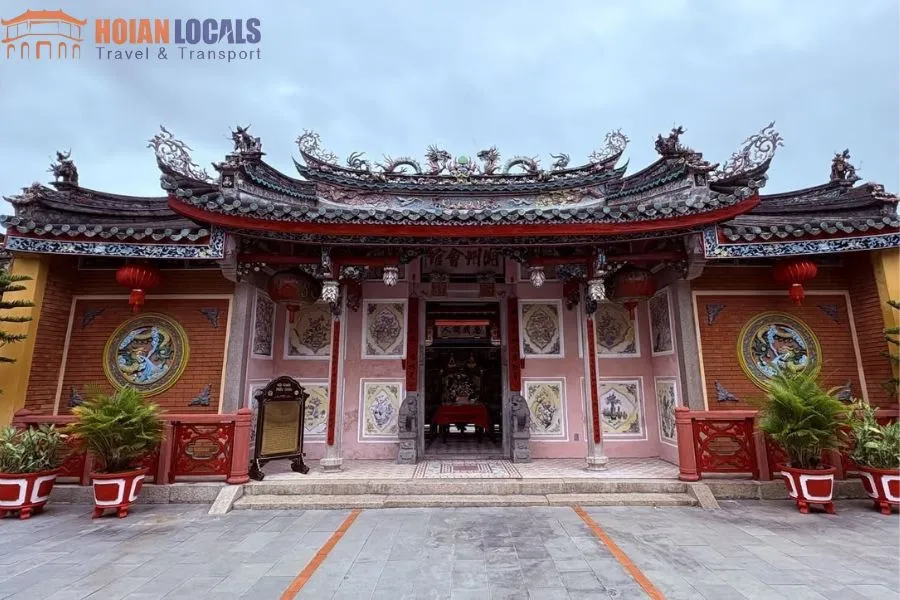
Why should you visit the Quang Dong Assembly Hall?
- Cultural Discovery: The Assembly Hall is a place for you to learn about the history and culture of the Chinese community in Hoi An.
- Experience the spiritual space: Coming here, you will have the opportunity to feel the sacred atmosphere and find peace of mind.
- Admire the unique architecture: The Assembly Hall is a unique work of architectural art, worth exploring and admiring.
- Take beautiful photos: With ancient architecture and beautiful space, the guildhall is an ideal place for you to take souvenir photos.
The Cantonese Assembly Hall is not only a tourist destination but also a living museum of culture and history.
“Don’t miss the opportunity to explore this spiritual home of the Chinese people! ”.
Chaozhou (Trieu Chau) Assembly Hall – History, Architecture & Visitor’s Guide
- Address: 362 Nguyen Duy Hieu, Hoi An Ward, Da Nang City
- Opening hours: 8:30 – 17:00 daily
The Chaozhou Assembly Hall (Ong Bon Pagoda) was built in 1845 by the Chaozhou Chinese community in Hoi An. It served as a community center and a place of worship, where merchants prayed to the sea gods for safe voyages and prosperous trade.
- Unique architecture: The Chaozhou Assembly Hall has typical Chinese architecture, with sophisticated lines and meticulous decorative patterns. The main structures in the assembly hall include:
- Temple: Place to worship guardian gods and ancestors.
- Back temple: Place to worship Buddha and other gods.
- Garden: An open space with lots of trees and a lake.
- Cultural values: The Chaozhou Assembly Hall is not only an architectural work but also a place to preserve the traditional cultural values of the Chaozhou Chinese. Here, you can learn about the customs, rituals, cuisine, and cultural activities typical of this community.
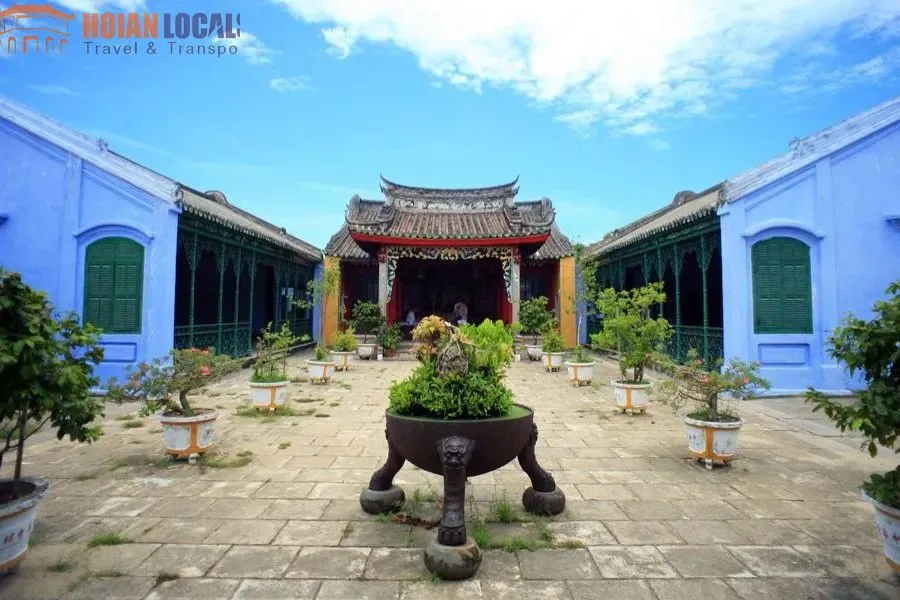
Why should you visit the Chaozhou Assembly Hall?
- Explore unique architecture: Admire the delicate lines and elaborate decorative patterns of the building.
- Learn about Chinese culture: Immerse yourself in a unique cultural space and learn about the history and traditions of the Teochew Chinese community.
- Experience a peaceful space: Relax in the airy garden space and regain balance in your soul.
- Take beautiful photos: The Chaozhou Assembly Hall is an ideal place for you to create impressive photos.
The Assembly Hall of Chaozhou is a must-see destination when you come to Hoi An. This is where architecture and culture intersect, helping you better understand the history and people here.
Assembly Hall of Five States – Assembly Hall of Five Different States from China
- Address: 64 Tran Phu Street, Minh An, Hoi An Ward, Da Nang City
- Opening hours: 07:00 – 11:00 and 14:00 – 16:00 every day
Ngu Bang Assembly Hall, also known as Duong Thuong Assembly Hall or Trung Hoa Assembly Hall, is a unique architectural work that has the mark of Chinese culture in Hoi An. The assembly hall, built in 1741, was a place of community activities and worship for merchants from 5 states: Fujian, Chaozhou, Guangdong, Hainan, and Gia Ung.
- Unique architecture and deep meaning: Ngu Bang Assembly Hall showcases traditional Chinese architecture with curved tiled roofs, red brick walls, and intricate decorations. Inside, its worship spaces, carved lacquered boards, and parallel inscriptions reflect Chinese philosophy, morality, and religious beliefs.
- Historical and cultural values: Ngu Bang Assembly Hall is both a remarkable architectural landmark and a cultural museum, preserving the history and traditions of the Chinese community. It reflects the cultural exchange between Vietnam and China and the life of Chinese merchants in ancient Hoi An.
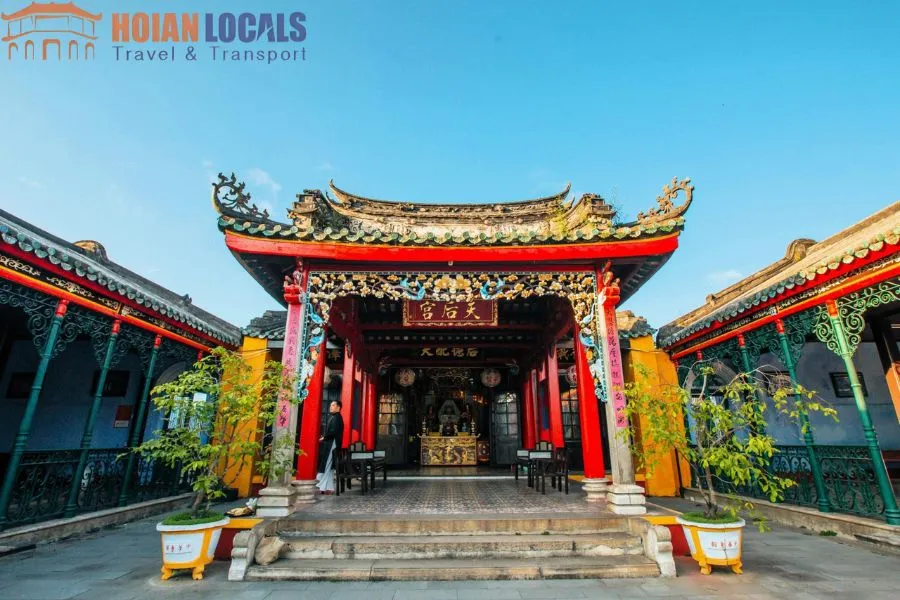
Interesting things when coming to Ngu Bang Assembly Hall
- Explore unique architecture: Admire the intricate lines and decorative patterns and learn about the meaning of each architectural detail.
- Learn about Chinese culture: Learn about beliefs, customs, and historical stories associated with the assembly hall.
- Experience the peaceful atmosphere: Enjoy the quiet, peaceful space and feel relaxed.
- Take souvenir photos: Capture beautiful moments at one of Hoi An’s most famous locations.
If you have the opportunity to visit Hoi An, do not miss the opportunity to explore Ngu Bang Assembly Hall. So, take your time to immerse yourself in the peaceful, quiet space of this place and feel the profound cultural values.
Hai Nam Assembly Hall – A Complete Visitor’s Guide
- Address: 10 Tran Phu Street, Hoi An Ancient Town, Hoi An, Da Nang
- Opening hours: 08:00 – 17:00 daily
Hai Nam Assembly Hall or Quynh Phu Assembly Hall. The building was constructed in 1875 by the Hainanese Chinese community as a place for communal activities, worship, and cultural identity. Unique architecture and profound meaning: Hai Nam Assembly Hall possesses typical Chinese architecture, with sophisticated and harmonious lines. In addition, the main items of the assembly hall include the following:
- Main Hall: The main place of worship, with an altar depicting the unique scene of the three realms, “Heaven, Earth, and Water.”
- Front House: A place to welcome guests and organize community activities.
- East-West House: Used for living and meetings of members.
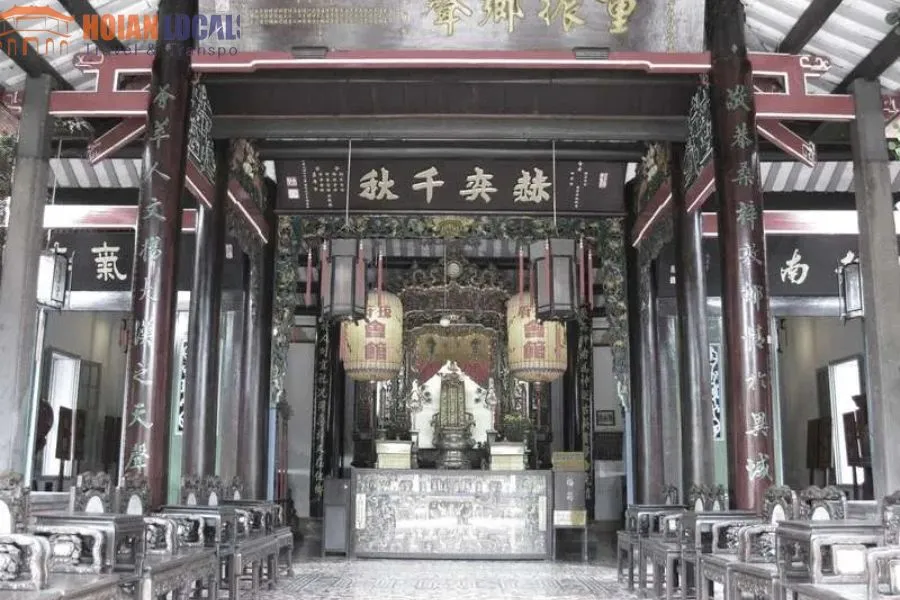
Inside the main shrine, people worship the tablets of 108 Hainan Chinese merchants who were killed at sea. The side shrines worship the God of Wealth and ancestors with the meaning of praying for wealth and the blessing of ancestors.
Historical and cultural value: Hai Nam Assembly Hall is not only a beautiful architectural work but also a historical witness of the Chinese community in Hoi An. This place preserves the unique cultural and religious values of the Hai Nam people, contributing to enriching the diverse cultural picture of Hoi An’s ancient town.
Interesting things when visiting Hai Nam Assembly Hall
- Explore unique architecture: Admire the sophisticated lines and elaborate decorative patterns of the building.
- Learn about history and culture: Hear stories about the Chinese community in Hoi An and about the meaning of worship rituals.
- Experience the peaceful atmosphere: Find a small corner to relax and feel the serenity of the space.
- Virtual check-in: With beautiful angles, Hai Nam Assembly Hall will definitely satisfy virtual life enthusiasts.
On the occasion of Vietnam Cultural Heritage Day 2016, Hai Nam Assembly Hall was honored to be introduced into the sightseeing route of Hoi An ancient town. Please, plan your time reasonably in your travel schedule so as not to miss the opportunity to visit these assembly halls.
What to Eat in Hoi An?
The cuisine of Hội An celebrates its rich heritage with dishes you won’t find anywhere else. From street stalls to family-run eateries, every bite tells a story of local ingredients and centuries-old recipes.
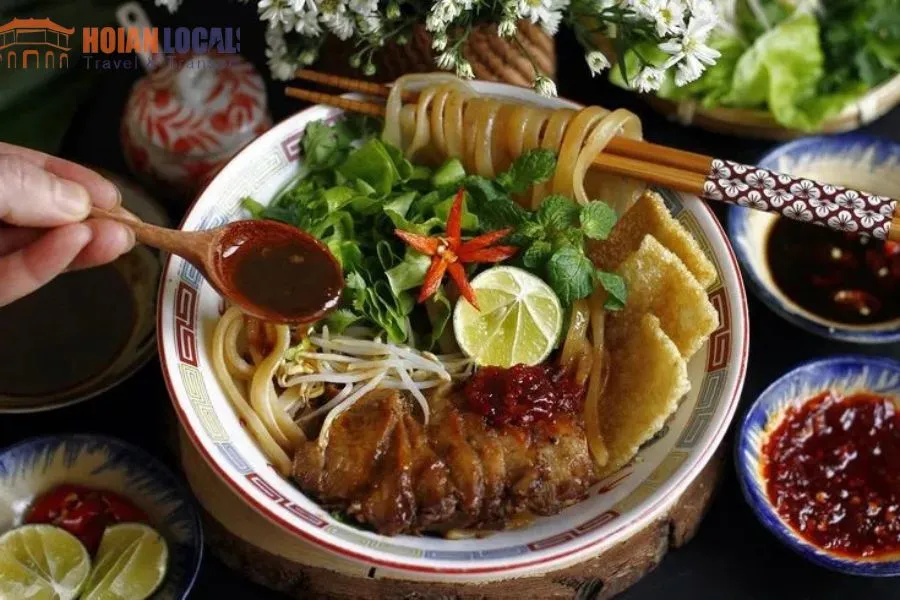
Cao Lau Noodles
Cao Lau is Hoi An’s signature noodle dish, made with thick, chewy noodles traditionally prepared using water from Ba Le Well. It is served with marinated pork, fresh herbs, bean sprouts, and crispy rice crackers. offering a unique local flavor. For an authentic bowl, visit Thanh Cao Lau (26 Thai Phien St.), where prices start at around VND 40,000.
White Rose Dumplings (Bánh Bao Bánh Vạc)
White Rose Dumplings are delicate steamed rice dumplings filled with seasoned shrimp and served with a light shrimp-based dipping sauce. This iconic Hoi An specialty is best enjoyed at White Rose Restaurant (533 Hai Ba Trung St.), with prices starting from around 80,000 VND. Pair it with a chilled passionfruit juice for a refreshing meal.

Banh Mi Phượng
Banh Mi Phượng is one of Hoi An’s most famous street food spots, known for its crispy baguettes filled with pork, pâté, fresh vegetables, and herbs. Prices range from 30,000 VND to 50,000 VND, with vegetarian options available. Visit before 11 AM to avoid long queues.

Entrance Fee in the Assembly Halls in Hoi An
The Trung Hoa Assembly Hall and the Haian Assembly Hall are free of charge for visitors. For the other three sites, you need to buy a ticket at 120,000 VND to visit the sites in Hoi An Ancient Town. Therefore, you can take 3/4 of the stubs on your ticket to see them or just visit the ones that look most appealing. Fujian and Cantonese Assembly Halls are the most popular.

Tourist Tips for Visiting Assembly Halls in Hoi An
- Visit in the morning or late afternoon: These times are cooler, softer on photos, and less crowded.
- Purchase a ticket for Hoi An Ancient Town: Buy a ticket before starting your walking tour. Because the ticket gives you admission to most of the assembly halls. Dress respectfully.
- Be respectful in your dress: Wear clothing that covers your shoulders and knees, as the assembly halls are active places of worship.
- Follow temple etiquette: Keep your voice low, avoid touching sacred objects, and respect any signs prohibiting photography or flash.
- Explore on foot: All five assembly halls are located within Hoi An Ancient Town and are just a short walk from one another, making them easy to visit in a single trip.
- Take time to admire the details: Admire the intricate carvings, ceramic mosaics, dragon sculptures, and Chinese calligraphy.
- Plan your visit before evening: Most assembly halls close between 5:00 PM and 6:00 PM, even though the Ancient Town remains lively after dark.
Itinerary to Visit Assembly Halls in Hoi An for First-Timers
If this is your first time visiting, this step-by-step 1-day Hoi An Town itinerary will help you experience the very best of the town’s rich history, stunning architecture, and legendary food.
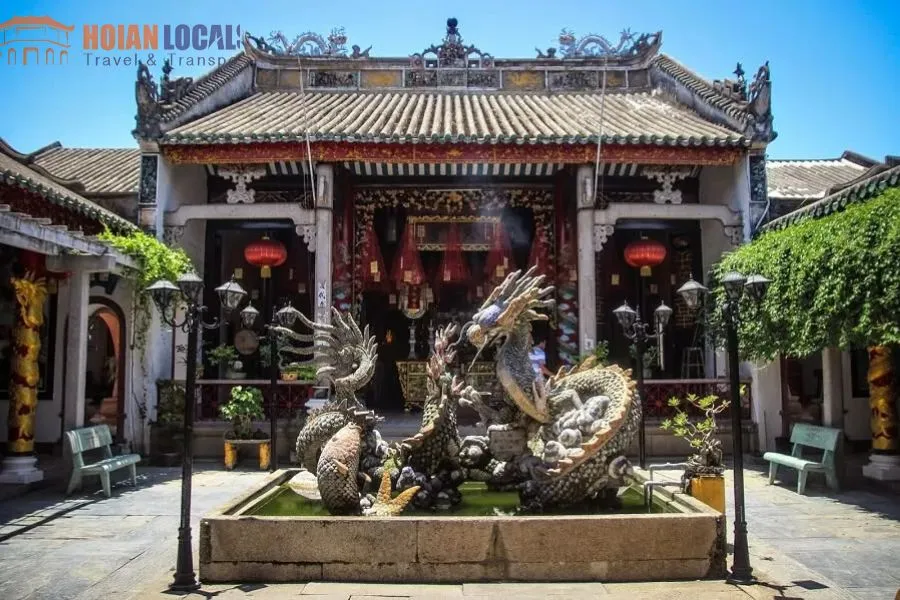
Morning (8:00 AM – 11:30 AM): Ancient Streets and Historic Assembly Halls
The morning is the ideal time to explore Hoi An. Start with a famous Banh Mi Phuong breakfast and Vietnamese coffee, then buy an Old Town ticket (VND 120,000 for international visitors). After that, visit the iconic Japanese Covered Bridge, an 18th-century landmark symbolizing the cultural blend of Vietnam, Japan, and China.
Afternoon (2:30 PM – 5:00 PM): Instagrammable Gate and Quiet Hall
- Photos: Check-in at the beautiful Ba Mu Temple Gate; visit Chaozhou or Hai Nam Assembly Hall.
- Walk: Enjoy the peaceful streets as the Old Town bans motorized scooters starting from 3:00 PM.
Evening (5:00 PM – 9:00 PM): Magical Lanterns & Night Market
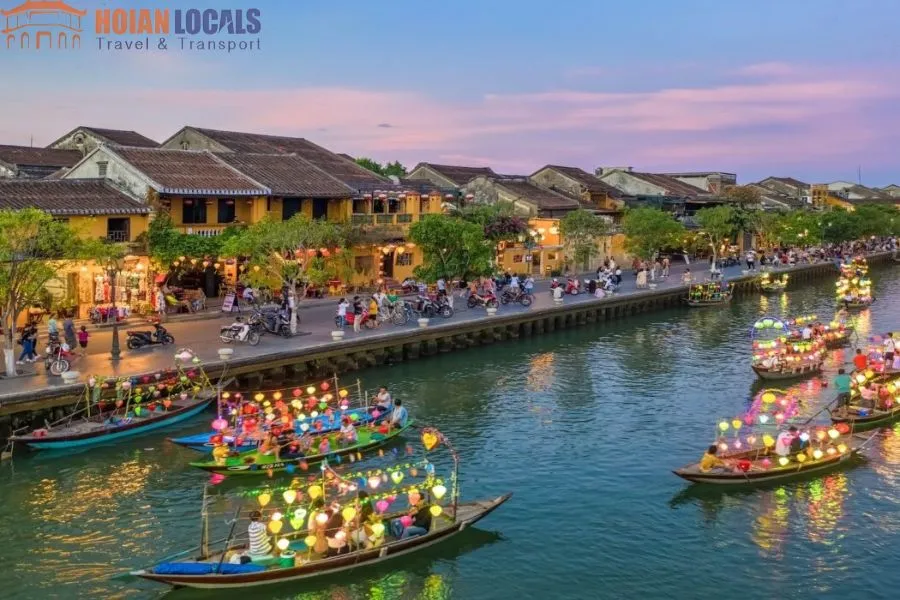
- Sunset: Take a traditional wooden boat ride on the Hoai River to watch the town light up and release a lucky paper lantern.
- Night Market: Cross over to An Hoi Island to explore the Nguyen Nguyen Night Market and snap photos with the glowing lantern stalls.
- Dinner: Snack on local street food at the market
Conclusion
In conclusion, five assembly halls in Hoi An will be a place you can’t miss if you want to have great photos. In the ancient, large, and peaceful space of Hoi An, there are assembly halls. Visitors coming here, therefore, get the chance to walk, see the scenery, and take amazing photos.
Finally, the information of Hoi An Locals gives you; we hope this guide has provided you valuable insights into the fascinating assembly halls in Hoi An—a must-visit when you come to Hoi An.